Showing posts with label West Java. Show all posts

Thursday, 17 July 2014

Sundanese dance

Sundanese dance

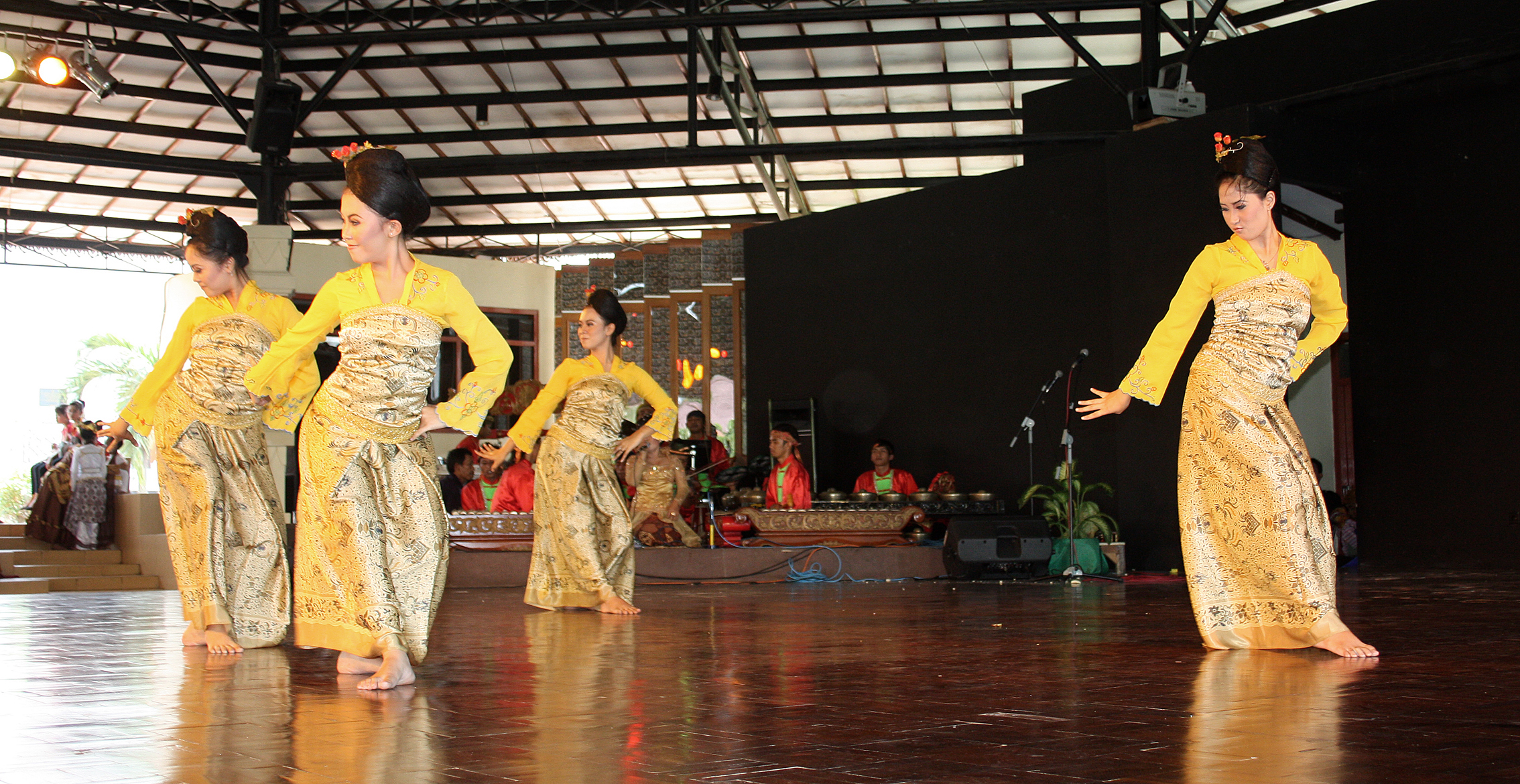
Sundanese dances is a dance tradition that is a part of ritual, artistic expression as well as entertainment and social conduct among the Sundanese people of West Java, Indonesia. Sundanese dance is usually cheerful, dynamic and expressive, with flowing movements in-sync with the beat of kendang accompanied with Gamelan degung music ensemble.
Sundanese danceIn Sundanese culture the term ngibing means "to dance", but it is indeed performed in particular Sundanese style, usually performed between male and female couple. In West Java, all it takes is a woman’s voice and a drum beat to make a man get up and dance. Every men there breach ordinary standards of decorum and succumb to the rhythm at village ceremonies or weddings. The music the men dance to varies from traditional gong degung ensembles to the contemporary pop known as dangdut, but they consistently dance with great enthusiasm. Henry Spiller in "Erotic Triangles" draws on decades of ethnographic research to explore the reasons behind this phenomenon, arguing that Sundanese men use dance to explore and enact contradictions in their gender identities. Framing the three crucial elements of Sundanese danceâ€"the female entertainer, the drumming, and men’s sense of freedomâ€"as a triangle.
Sundanese danceAmong Sundanese dances perhaps Jaipongan is the most popular styles and form. Jaipongan dance could be performed solo by a female dancer, in group of female dancers, as couple between professional female and male dancers, or as couple when professional female dancers invite male audience to dance with them. Other Sundanese dances include Topeng Sunda, Kandagan, Merak, Sisingaan, and Badawang dances. The Merak dance is a dance performed by female dancers inspired by the movements of a peafowl and its feathers blended with the classical movements of Sundanese dance, it symbolises the beauty of nature. Some dances might incorporated Pencak Silat Sundanese style movements. Because Sundanese culture are commonly developed among rice farming villages in mountainous Priangan, some dance rituals such as Buyung dance are involved in Seren Taun rice harvest festival, accompanied with angklung music. Rampak kendang on the other hand are actually synchronized kendang performances involving some coordinated dance movements. The Sundanese style of Reog dance is different than those of East Javanese Reog Ponorogo. The Reog Sunda performance combines comedy, joke, music, and funny comical movements and dances of the performers.
Unlike its Javanese counterpart, there is no clear distinction based on social hierarchy between court dances and the commoners' dances in Sundanese tradition. Most of Sundanese dance traditions and its culture are developed by common people in villages, the fact partly contributed to Sundanese history; the absence of Sundanese court culture since the fall of Sunda Pajajaran kingdom in late 16th century. Sundanese people however are familiar with aristocratic culture of the menak (nobles) in Priangan region, especially in Cianjur, Bandung, Sumedang and Ciamis. The musical art such as Kacapi suling demonstrate the subtlety of aristocratic Sundanese arts.
In 17th century the Sundanese Priangan region was held under Javanese Mataram kingdom, as the result the Sundanese culture were exposed to Kejawen influences, such as wayang and Javanese dance styles. Wayang Golek although performed in Sundanese language, style and themes, it bears the same frame of references with Javanese Wayang Kulit tradition, that often took episodes from Ramayana or Mahabharata. The courtly Sundanese dances were developed by Sundanese nobles such as Keurseus dance, Badaya Sunda, Sarimpi Kasumedangan, Ratu Graeni, Dewi and Wayang Orang dance in Sundanese Sandiwara style, all demonstrate the influences of Javanese Mataram courtly culture.

Related Sites for Sundanese dance

Thursday, 12 September 2013

Cimahi is a city located west of Bandung, West Java, Indonesia

Cimahi

Cimahi

Cimahi is a city located west of Bandung, West Java, Indonesia in the Bandung Metropolitan Area. The city is a major textile producer exporter, and is host to several military education facilities.
Under the colonial Dutch East Indies government Cimahi was the location of one of the region's main military sites.
CimahiThe northern part of the city is hillier than the rest; the distinguished truncated flat-peak shape of the Tangkuban Parahu volcano and the Burangrang Mountain (the inactive part of the once Vulcanic Mount Sunda) can be seen from the city to the north. Long-term volcanic activity has created fertile andisol soil in the north, suitable for intensive rice, fruit, tea, tobacco and coffee plantations. To the east of cimahi there was Tagog apu (a limestone hill, a remnant of the 20-30 Million Years old bandung sea).
Recent geological investigations indicate that the oldest lake deposits has been radiometrically dated as old as 125 thousand years. The lake ceased to exist at 16000 Before present.
There had been two Plinian type of eruptions of ancient Mount Sunda dated respectively at 105000 and 55000-50000 BP. The 2nd plinian eruption has caused ancient Gunung Sunda’s caldera to collapse and create mount Tangkuban Parahu, Mount Burangrang, and Mount Bukit Tunggul.
It is more likely that the ancient Sundanese have lived in the Bandung area long before 16,000 years BP and witnessed the 2nd Plinian eruption which wiped out settlements west of the Cikapundung river during the 55000-50000 eruption period when Mount Tangkuban Parahu was created from the remnants of ancient Mount Sunda. This era was the era of homo sapiens; they have been identified in South Australia as old as 62000 BP, while on Java the Wajak man has been dated about 50000 BP.
Cimahi started known publicly in 1811, When Governor General Daendels made the Anyer-Panarukan Roads, which connect Java Island from its western to its eastern end. there was built a security post, known as LOJI in Cimahi square. Furthermore around 1874-1893, in Cimahi a railroads station was built as a sub station that connect Bandung to Cianjur. 1886 was marked as Cimahi military era, when the Dutch colonialism built military training and education center from infantry, cavalry, supply, and other facility such as Dustira Army Hospital and latter on the army Housing complex KPAD Sriwijaya. There is a Dutch military cemetery, Villages of Leuwigajah, maintained and occasionally visited by Dutch visitors to West Java. In the Year 1935 Cimahi was formed as Subdistrict. In 1962 it was enhanced to became Regency (Kawedanan or Kabupaten) with its four Sub District Cimahi, Padalarang, Batujajar, and Cipatat. and alongside its journey on 1975 with Government Rule no 25 (PP no 29 tahun 1975) it received higher status as an administrative city (a resident which will become a city), which officially announced by the Indonesian government on 29 January 1976. Finally Based on Law No 9 in 2001 ( UU No 9 Tahun 2001) cimahi was publicly announced as a whole city, a cimahi city, which has a fully autonomy rule on its government, healtcare, education and culture, defense, trade and other thing except foreign affair.
The city area in 2001 was 40.25 square kilometres. The city administration is divided into 3 subdistricts and 15 Villages (Kelurahan). A mayor (walikota) leads the city administration with the help of the city council members or known as the Regional People's Representative Council (DPRD - Dewan Perwakilan Rakyat Daerah).
Taman Kupu-kupu or Butterfly Garden at Cihanjuang, Cimahi except has butterfly breeding, has also rabbit breeding.

Related Sites for Cimahi

Wednesday, 11 September 2013

West Java, province of Indonesia

West Java

West Java
West Java is a province of Indonesia. It is located in the western part of the island of Java and its capital and largest urban center is Bandung. The province’s population is 45 million and it is the most populous and most densely populated of Indonesia’s provinces.
West JavaOne of the earliest known recorded history in Indonesia is from the former Tarumanagara kingdom, where seven 4th century stones are inscribed in Wengi letters and in Sanskrit describing the kings of the kingdom Tarumanagara. Records of Tarumanegara's administration lasted until the 6th century, which coincides with the attack of Srivijaya, as stated in the Kota Kapur inscription (AD 686).
The Sunda kingdom subsequently became the ruling power of the region, as recorded on the Kebon Kopi II inscription.
West JavaAn Ulama, Sunan Gunung Jati, settled in Cirebon, with the intention of spreading the world of Islam in the pagan town. In the meantime, the Sultanate of Demak in central Java grew to an immediate threat against the Sunda kingdom. To defend against the threat, Prabu Surawisesa Jayaperkosa signed a treaty with the Portuguese in 1512. In return, the Portuguese were granted an accession to build fortresses and warehouses in the area, as well as form trading agreements with the kingdom. This 1st international treaty of West Java with the Europeans was commemorated by the placement of the Padrao stone monument at the bank of the Ciliwung River in 1522.
Although the treaty with the Portuguese had been established, it could not come to realization. Sunda Kalapa harbour fell under the alliance of the Sultanate of Demak and the Sultanate of Cirebon in 1524, after their troops under Paletehan alias Fadillah Khan had conquered the city. In 1524/1525, their troops under Sunan Gunung Jati also seized the port of Banten and established the Sultanate of Banten which was affiliating with the Sultanate of Demak. The war between the Sunda kingdom with Demak and Cirebon sultanates then continued for five years until a peace treaty were made in 1531 between King Surawisesa and Sunan Gunung Jati. From 1567 to 1579, under the last king Raja Mulya, alias Prabu Surya Kencana, the Sunda kingdom declined, essentially under the pressure from Sultanate of Banten. After 1576, the kingdom could not maintain its capital at Pakuan Pajajaran (the present-day Bogor) and gradually the Sultanate of Banten took over the former Sunda kingdom's region. The Mataram Sultanate from central Java also seized the Priangan region, the southeastern part of the kingdom.
In the sixteenth century, the Dutch and the British trading companies established their trading ships in West Java after the falldown of Sultanate of Banten. For the next three hundred years, West Java fell under the Dutch East Indies' administration. West Java was officially declared as a province of Indonesia in 1950, referring to a statement from Staatblad number 378. On October 17, 2000, as part of nationwide political decentralization, Banten was separated from West Java and made into a new province. There have been recent proposals to rename the province Pasundan after the historical name for West Java.
West Java borders Jakarta and Banten Province to the west, and Central Java to the east. To the north is the Java Sea. To the south is the Indian Ocean. Unlike most other provinces in Indonesia which have their capitals in coastal area, the provincial capital, Bandung, is located in the mountainous area in the centre of the province. Banten Province was formerly part of West Java Province but was created a separate province in 2000. West Java, in the densely populated western 3rd of Java, is home to almost 1 out of every 5 Indonesians.
West Java and Banten provinces, as a part of the Pacific Ring of Fire, have more mountains and volcanoes than any of the other provinces in Indonesia. The vast volcanic mountainous region of inland West Java is traditionally known as Parahyangan which means "The abode of hyangs (gods)". It is considered as the heartland of the Sundanese people. The highest point of West Java is the stratovolcano Mount Cereme (3,078 meters) bordering Kuningan and Majalengka Regencies. West Java has rich and fertile volcanic soil. Agriculture, especially traditional dry rice cultivation (known as ladang), has become the main way of life of traditional Sundanese people. Since the colonial VOC and Dutch East Indies era, West Java has been known as a productive plantation area for coffee, tea, quinine, and many other cash crops. The mountainous region of West Java is also a major producer of vegetables and decorative flowering plants. Sunny tropical sites with a cool atmosphere and beautiful scenery are frequently across almost all of West Java and Banten except in the northern parts ( the Java sea beaches). The landscape of the procine is one of volcanic mountains, steep terrain, forest, mountains rivers, fertile agricultural land, and natural sea harbours.
Initially, the economy of the Sundanese people in West Java relied heavily on rice cultivation. Ancient kingdoms established in West Java such as the Tarumanagara and Sunda Kingdom are known to have relied on rice taxes and agriculture revenues. The cycle of life of the ancient Sundanese people revolvied around the rice crop cycle. Traditional rice harvest festivals such as the Seren Taun were important. The ancient goddess of rice, Nyai Pohaci Sanghyang Asri, is revered in Sundanese culture. Traditionally, Sundanese people often used dry rice cultivation. After the Mataram expanded to the Priangan area in the early 17th century following the Sultan Agung campaign against Dutch Batavia, sawah (wet rice cultivation) began to be adopted in the northern lowlands of West Java. Regencies such as Indramayu, Cirebon, Subang, Karawang and Bekasi are now well known as key rice producing areas. The mountainous region of West Java supplies vegetables, flower and many horticultural produce to Jakarta and Bandung. Animal farms in West Java produce dairy products and meats.
During the Dutch East India Company and Dutch East Indies era, West Java fell under Dutch administration centered in Batavia. The Dutch colonial government introduced cash crops such as tea, coffee, and quinine. Since the 18th century, West Java (known as "De Preanger") was known as a productive plantation area, and became integrated with global trade and economy. Services such as transportation and banking were provided to cater for wealthy Dutch plantation owners. West Java is known as one of the earliest developed regions in the Indonesian archipelago. In early 20th century, the Dutch colonial government developed infrastructures for economic purposes, especially to support Dutch plantations in the region. Roads and railways were constructed to connect inland plantations area with urban centers such as Bandung and port of Batavia.
After Indonesian independence in 1945, West Java became a supporting region for Jakarta, the Indonesian capital. Jakarta remained as the business and political center of Indonesia. Several regencies and cities in West Java such as Bogor, Bekasi and Depok were developed as supporting areas for Jakarta and came to form the Greater Jakarta area or Jabodetabek. The northern area of West Java has become a major industrial area. Areas such as Bekasi, Cikarang and Karawang are sprawling with factories and industries. The area in and around Bandung also developed as industrial area.
Endowed with natural beauty and rich culture, tourism is also an important industry in West Java. The Puncak area and Bandung have long been known as popular weekend destinations for Jakartans. Today Bandung has developed into a chic and fashionable shopping destination, popular not only among local Indonesian especially Jakartans, but also a popular shopping destination for neighboring Malaysian and Singaporeans. The ancient coastal city of Cirebon is also popular as cultural tourism destination since the city has several kratons and many historical sites such as Gua Sunyaragi. Other popular tourism destinations include the Bogor Botanical Garden, Taman Safari Indonesia, Tangkuban Perahu crater, Ciater hot springs, Kawah Putih crater to the south of Bandung, Pangandaran beach, and various mountain resorts in Cianjur, Garut, Tasikmalaya, and Kuningan.
West Java is the native homeland of Sundanese people which forms the largest ethnic group in West Java, followed by Javanese who migrated to the province centuries ago. Since Jakarta and the surrounding area, including West Java, is the business and political center of Indonesia, the province has attracted various people from throughout Indonesia. Other Native Indonesian ethnic groups such as Minangkabau, Batak, Malay, Madurese, Balinese, Ambonese and many other Indonesians who migrated to and settled in West Java cities can also be easily found. West Java urban areas also have a significant population of Chinese Indonesians.
The population of West Java was put at 43,054,000 in mid-2010 making it the most populous province of Indonesia, home to 18% of the national total on 1.8% of the national land. Aside from the special district of Jakarta, it is the most densely populated province in the country with an average of 1,236 people per kmx. The population growth rate recorded in the ten years to 2010 was 1.9%, assuming this growth rate, the projected population in May 2012 is 44.7 million.
In addition to Indonesian, the official national language, the other widely-spoken language in the province is Sundanese. In some areas near the southern borders with Central Java, Javanese is also spoken. The main language spoken in Cirebon and nearby areas is Cirebonese, a dialect of Javanese with Sundanese influence. Indonesian is widely spoken as a 2nd language.
Sundanese share Java island with Javanese people. They primarily live in their home province of West Java. Although Sundanese live in the same island with Javanese, they consider themselves a distinct cultural area called Pasundan or Tatar Sunda. Someone moving from West Java Province to Central or East Java Provinces, is literally said to be moving from Sunda to Java. Bandung, the capital city of West Java, is considered as the cultural heartland of Sundanese people. Many indigenous Sundanese artforms were developed in this city.
The musical arts of Sunda, which is an expression of the emotions of Sundanese culture, express politeness and grace of Sundanese. Degung orchestra consists of Sundanese gamelan.
In addition to the Sundanese forms of Gamelan in Parahyangan, the region of Cirebon retains its own distinct musical traditions. Amongst Cirebons' varying Gamelan ensembles the two most frequently heard are Gamelan Pelog and Gamelan Prawa (a semi-equidistant pentatonic tuning system). Gamelan Pelog is traditionally reserved for Tayuban, Wayang Cepak, and for listening and dance music of the Kratons in Cirebon. Whereas Gamelan Prawa is traditionally reserved for Wayang Purwa.
Cirebon also retains specialized Gamelan ensembles including: Sekaten, which is played in the Kratons to mark important times in the Islamic calendar. Denggung, also a Kraton ensemble which is believed to have a number of "supernatural powers". And Renteng, an ensemble found in both Cirebon and Parahyangan that is known for its loud and energetic playing style.
Kacapi suling istembang Sunda minus vocal.
Tarawangsa is a genuine popular art is performed on ensemble consists of tarawangsa and the jentreng (a kind of seven-stringed zither). It is accompanied by a secret dance called Jentreng. The dance is a part of a ritual celebrating the goddess of paddy Dewi Sri. Its ceremonial significance is associated with a ritual of thanksgiving associated with the rice harvest. Tarawangsa can also be played for healing or even purely for entertainment.
The three main types of Sundanese bamboo ensembles are angklung, calung, and arumba. The exact features of each ensemble vary according to context, related instruments, and relative popularity.
Angklung is a generic term for sets of tuned, shaken bamboo rattles. Angklung consists of a frame upon which hang several different lengths of hollow bamboo. Angklungs are played like handbells, with each instrument played to a different note. Angklung rattles are played in interlocking patterns, usually with only one or two instruments played per person. The ensemble is used in Sundanese processions, sometimes with trance or acrobatics. Performed at life-cycle rituals and feasts, angklung is believed to maintain balance and harmony in the village. In its most modern incarnation, angklung is performed in schools as an aid to learning about music.
The Angklung got more international attention when Daeng Soetigna, from Bandung, West Java, expanded the angklung notations not only to play traditional pxlog or slxndro scales, but also diatonic scale in 1938. Since then, angklung is often played together with other western music instruments in an orchestra. One of the 1st well-known performances of angklung in an orchestra was during the Bandung Conference in 1955.

Related Sites for West Java
Saturday, 7 September 2013

Javan Hawk-Eagle, The National Bird of Indonesia

Javan Hawk-Eagle

Javan Hawk-Eagle

The Javan Hawk-Eagle is believed to be monogamous. The female usually lays one egg in a nest high on top of a forest tree. The diet consists mainly of birds, lizards, fruit bats and mammals.
The Javan Hawk-Eagle is the national bird of Indonesia, where it is commonly referred to as Garuda, from the bird-like creatures in Hindu and Buddhist myths. The scientific name commemorates Hans Bartels.
Javan Hawk-EagleBecause of the plumage variability of Spizaetus eagles, the Javan Hawk-Eagle wasn't recognised as a full species until 1953.
It is one of the rarest raptors. Due to ongoing habitat loss, small population size, limited range and hunting in some areas, it is evaluated as Endangered on the IUCN Red List of Threatened Species. It is listed on Appendix II of CITES.
In February 2012, there were only around 325 pairs of Javan Hawk-Eagles living in the wild, mainly in Malangbong, West Java forest area and some in East Java, but in Central Java, Mount Merapi forest area is denuded by eruptions and Dieng plateau forest area is denuded for agriculture. The adaptation of the bird is very difficult due to they prefer endemic Rasamala tree and endemic Javanese rat for their diet. Ideally the population should be 1,450 pairs and without conservation the eagle predicted will extinct in 2025.

Related Sites for Javan Hawk-Eagle

Thursday, 25 July 2013

Sultanate of Cirebon, An Islamic Sultanate in West Java

Sultanate of Cirebon


Sultanate of CirebonThe Sultanate of Cirebon was an Islamic sultanate in West Java founded in the late fifteenth century. It is said to have been founded by Sunan Gunungjati, marked by his letter proclaimed Cirebon's independence from Pajajaran in 1482, although the settlement and the polity itself already established earlier in 1445. Sunan Gunungjati also established the Sultanate of Banten. It was one of the earliest Islamic states established in Java, around the same period with the Sultanate of Demak.
The sultanate court lay in the vicinity of the modern day city of Cirebon on West Java's north coast. Throughout sixteenth to seventeenth century, the sultanate thrived to be the region's center of trade and commerce, as well as served as an Islamic learning and dissemination center. The sultanate disintegrated into four royal houses, started in 1677. Today there are four kratons in Cirebon; Keraton Kasepuhan, Kraton Kanoman, Keraton Kacirebonan, and Keraton Keprabonan, each descends their own lineage and all are the descendants and remnants of the Cirebon Sultanate.
Sultanate of CirebonMost of the history of Cirebon Sultanate were found from local Javanese chronicle known as Babad. Some of notable chronicles that focused on the history of Cirebon are Carita Purwaka Caruban Nagari and Babad Cerbon. Foreign sources also mentioned Cirebon, such as Tomx Pires' Suma Oriental, written in 1512-1515. The later period of the sultanate documented from the colonial Dutch East Indies sources. Other than recording its own history, one of royal houses of Cirebon, especially Keraton Keprabonan led by Wangsakerta princes, also actively recording and researching the history of Java by collecting old manuscripts.
There are several suggestions about the origin of the name "Cirebon". According Sulendraningrat who based on the script Babad Tanah Sunda and Atja on Carita Purwaka Caruban Nagari script, Cirebon at 1st was a small hamlet built by Ki Gedeng Tapa, which eventually evolved into a bustling port village and named Caruban, because the port town was a melting pot settled by immigrants from various ethnic groups, religions, languages, customs, and livelihoods different to reside or trade.
Another popular opinion suggested that the town's name derived from rebon the Sundanese word for small shrimp. Initially most of the people's livelihood was as fishermen, then developed the work of fishing and collecting rebon along the coast as well as making shrimp paste, petis paste, and salt. Rebon is the main ingredients on making shrimp paste. From the term of water used for shrimp paste manufacture that is called cai rebon (Sundanese for: rebon water) which later became Cirebon.
With the support of the bustling harbor and natural resources from the hinterland, Cirebon and then became a big city and become one of the important port on the north coast of Java in both the shipping and trading activities on the islands of the archipelago as well as with the rest of the world. In addition, the Islamic Sultanate of Cirebon grow into the center to spreading Islam in West Java.
The coastal area around the port of Cirebon was known as a coastal village of Muara Jati, a part of Sunda kingdom as stated on travel records of Prince Bujangga Manik, a Hindu Sundanese hermit who visited some of the holy Hindu sites in Java and Bali between late 15th century, or early 16th century. In his lontar manuscripts. The border of the Sunda kingdom in the west is Sunda Strait and in the east is Cipamali river and Cisarayu river (present day Serayu River) in Central Java Province. At this time Muara Jati was located around 14 kilometers north from modern Cirebon, and later known as Singapura. The transformation from small Hindu coastal fishing village into thriving Muslim port began with the rule of Ki Gedeng Tapa.
Ki Gedeng Tapa was a wealthy merchant living in the village of Muara Jati. He was appointed as the port master of Muara Jati fishing village by Sunda king reside in Kawali, Galuh, located further inland south of Muara Jati. The Muara Jati was later called Singapura, located several kilometres north of modern Cirebon. The thriving port town attract Muslim traders. Ki Gedeng Tapa and his daughter, Nyai Subang Larang are said to be converted to Islam. Nyai Subang Larang studied at Quro pesantren (Islamic school) in Karawang area.
At that time the West Java region including Muara Jati were belongs to Sunda kingdom with its capital in Pakuan Pajajaran. Sunda King Prabu Jayadewata or Sri Baduga Maharaja or popularly known as King Siliwangi married to Nyai Subang Larang and have three child; Prince Walangsungsang born in 1423, Princess Rara Santang born in 1426, and Prince Kian Santang (Raden Sangara) born in 1428.
Although Prince Walangsungsang was the first-born son of Sunda King, the prince didn't earned the right as a crown prince of Pakuan Pajajaran. This was because his mother, Nyai Subang Larang wasn't the prameswari. Another reason was probably because of his conversion to Islam, probably influenced by his mother, Subang Larang whom was a Muslim woman. At that time in 16th century West Java, the state's religion was the Sunda Wiwitan (Sundanese ancestral religion), Hinduism and Buddhism. It was his half brother, King Siliwangi's son from his 3rd wife Nyai Cantring Manikmayang, was chosen as crown prince, later ascended to the throne as King Surawisesa.
In 1442 Prince Walangsungsang married to Nyai Endang Geulis, daughter of Ki Gedheng Danu Warsih from Gunung Mara Api hermitage. Walangsungsang with his sister Rara Santang wondering around several hermitages to study spiritualism. In Gunung Amparan Jati they met an ulama Sheikh Datuk Kahfi from Persia. Walangsungsang, Rara Santang, and Endang Geulis, learn Islam from Sheikh Kahfi. The Sheikh ask the Prince to open a new settlement in the area Southeast from Gunung Jati. Walangsungsang was assisted by Ki Gedheng Danusela, Ki Gedheng Danu Warsih's younger brother. The new settlement was called Dukuh Alang-alang. By clearing forest, he established a new settlement on 1 Shura (Muharram) in 1358 (Javanese Islamic calendar), coincide with the 8 April 1445 CE.
People of this new settlement elected Danusela as their new kuwu later refer to as Ki Gedeng Alang-alang. He appointed Raden Walangsungsang as his deputy, titled as Pangraksabumi. However Ki Gedeng Alang-alang died two years later in 1447.
After Ki Gedeng Alang-Alang's death in 1447, Walangsungsang appointed as the ruler of the town and established a court and assumed a new title as Prince Cakrabuana. The coastal port village attract settlers from overseas as well as inland and forming a thriving new society in the village named Caruban, which means mixture in Sundanase to describe the compositions of its settlers. Two years after its establishment the record dated from 1447 shows the cosmopolitan composition of this thriving port town. According to this record the settlers of Caruban at that time was 346 people, composed from various ethnics background; 196 Sundanese, 106 Javanese, 16 Sumatran, 4 Malaccan, 2 Indian, 2 Persian, 3 Siamese, 11 Arabs, and 6 Chinese settlers.
After a hajj pilgrimage to Mecca, Prince Cakrabuana changed his name to a Muslim one, Haji Abdullah Iman. He built a thatched hut and a tajug pavilion called Jalagrahan, and expanded it as Pakungwati palace, today are pendopos located in front of Kasepuhan Palace, establishing his court in Cirebon. Thus he was considered as the founder of Cirebon. After the death of Cakrabuana grandfather, Ki Gedeng Tapa (Ki Gedeng Jumajan Jati), Cakrabuana receive inheritance; the Singapura settlement located north of Caruban were merged and incorporated into Caruban realm. The fortunes from inheritance was used to expand Pakungwati palace. His father King Siliwangi sent his envoy Tumenggung Jagabaya and Raja Sengara (Cakrabuana's younger brother), to bestow Prince Carkrabuana with the title Tumenggung Sri Mangana. Cirebon grew into a thriving port, yet Cakrabuana still loyal to his father and sent tribute to the main court of Sunda Pajajaran.
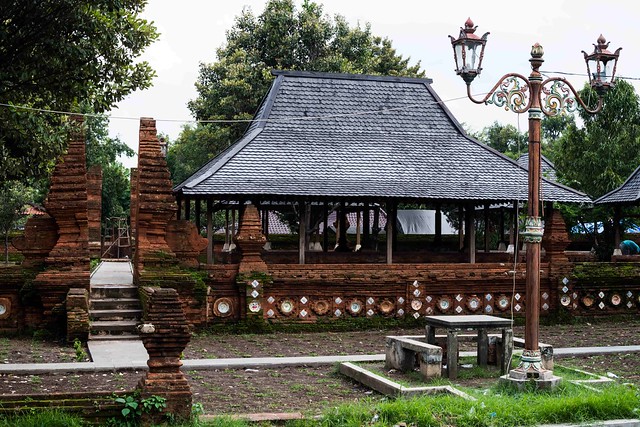
The early period of Cirebon Sultanate was commonly identified as Pakungwati period. It refer to Pakungwati palace, a Javanese style compound consists of series of pendopos enclosed within red brick walls and gates in typical Majapahit style of architecture. Pakungwati compound located north of Keraton Kasepuhan and today incorporated within Kasepuhan compound. During Pakungwati period, Cirebon Sultanate was a unified kingdom under one monarch. He was the 1st king of Cirebon, ruled from his palace Pakungwati and actively spread Islam to the people of Cirebon and West Java.
Meanwhile, Rara Santang during her hajj pilgrimage met Sharif Abdullah of Egypt and get married. She change her name to Syarifah Mudaim and in 1448 born a son Sharif Hidayatullah. In 1470 Syarif Hidayatullah went aboard to study at Mecca, Baghdad, Champa, and Samudra Pasai. Later he came home to Java. He learn from Sunan Ampel in East Java, served in Demak court, and later came back to Cirebon. He asked his uncle, Tumenggung Sri Mangana to establish Islamic school in Caruban or Carbon.
After his resignation in 1479 CE, Cakrabuana was succeeded by his nephew, Sharif Hidayatullah, the son of Nyai Rara Santang and Sharif Abdullah of Egypt. He married his cousin, Nyi Mas Pakungwati daughter of Cakrabuana and Nyai Mas Endang Geulis. He is popularly known with his posthumously name, Sunan Gunung Jati, with stylized name Tumenggung Sharif Hidayatullah bin Sultan Maulana Muhammad Sharif Abdullah, and also holding the title as Ingkang Sinuhun Kangjeng Susuhunan Jati Purba Panetep Panatagama Awlya Allah Kutubid Jaman Khalifatur Rasulullah. He ascend the throne as Sultan Carbon I reside in Keraton Pakungwati.
In 1482 Sharif Hidayatullah sent letter to his grandfather King Siliwangi, with statement that Cirebon refusing to pay tribute to Pajajaran. Previously Cakrabuana always paid Pajajaran tribute to acknowledge Sunda overlordship over Cirebon. By doing this Cirebon proclaimed itself as a sovereign independent state. The Cirebon independence proclamation was marked with Chandrasengkala Dwa Dasi Sukla Pakca Cetra Masa Sahasra Patangatus Papat Ikang Sakakala, corresponds with 12 Shafar 887 Hijri or 2 April 1482 CE. Today the day marked as the anniversary of Cirebon Regency.
First the king of xumda with his great city of Dayo, the town and lands and port of Bantam, the port of Pomdam (Pontang), the port of Cheguide (Cigede), the port of Tamgaram (Tangerang), the port of Calapa (Kelapa), and the port of Chemano (Chi Manuk or Cimanuk), this is Sunda, because the river of Chi Manuk is the limit of both kingdoms. Now comes Java and we must speak of the kings within the hinterland. The land of Cheroboam (Cherimon), the land of Japura, the land of Locarj (Losari), the land of Tateguall (Tegal), the land of Camaram (Semarang), the land of Demaa (Demak), Tidumar (Tidunan), the land of Japara (Jepara), the land of Ramee (Rembang), the land of Tobam (Tuban), the land of Cedayo (Sedayu), the land of Agasij (Grisee or Gresik), the land of Curubaya (Surabaya), the land of Gamda, the land of Blambangan, the land of Pajarucam (Pajarakan), the land of Camtx, the land of Panarunca (Panarukan), the land of Chamdy, and when its ended we will speak of the great island of Madura.
According to Tome Pires report, Cirebon was identified as Cheroboam or Cherimon. In 1515 Cirebon was no longer under the authority of Hindu Sunda kingdom, but rather identified as Java north coast port. It refer to Cirebon has been established as a Muslim state, just like those of Demak and Gresik.
After the news of the Portuguese-Sunda alliance in 1522 became known, Gunungjati nevertheless asked Demak sultanate to send troops to Banten. It was likely his son, Hasanudin, who commanded this military operation in 1527, just as the Portuguese fleet was arriving of the coast at Sunda Kelapa, to capture these towns.
Sunan Gunungjati had Hasanudin named king of Banten by the Sultan of Demak who, in turn, offered Hasanudin his sister’s hand in marriage. Thus a new dynasty was born at the same time as a new kingdom was created. Banten was the capital of this kingdom, held as a province under Sultanate of Cirebon.
During the reign of Sharif Hidayatullah or Sunan Gunung Jati, Sultanate of Cirebon enjoyed a rapid growth and rose to become a prominence kingdom in the region. The thriving coastal port city become the center of trade as well Islamic learning and dissemination. The port town attract traders from Arabia to China. Sunan Gunung Jati is believed to be the founder of the dynasty that ruled both the Sultanate of Cirebon and Banten. He also credited as the proselytizer of Islam in West Java. Ulamas from his court and mosque spreading the messange of Islam to inland Majalengka, Kuningan, Kawali, as well as the neighboring coastal ports of Sunda Kelapa, and Banten.
Large numbers of foreign traders come to establishes trade relations with Cirebon. Chinese Ming Dynasty in particular, establishes closer relations signify by the visit of Ming dignitary Ma Huan. The ties between China and Cirebon grew much closer when Sunan Gunungjati took the hands Princess Ong Tien â€" the daughter of Chinese Emperor â€" in marriage during his visit to China. With this dynastic marriage, the Chinese Emperor wishes to establish close relations and strategic alliance with Cirebon. Apparently it is advantageous for Chinese interest in the region as well as Cirebon economic interest, as the city welcomes Chinese traders and businesses. After married to Sunan Gunungjati, Princess Ong Tien change her name to Nyi Rara Semanding. The Emperor of China brought his daughter some treasures, most of these relics that Ong Tien has brought from China still exist and stored in the museums of Cirebon royal houses. The close relations between China and Cirebon has made Cirebon a popular destination for Chinese immigrants in coming years to seek a better life in Indonesia, thus established Chinese Indonesian community. Cirebon Pecinan is among the oldest Chinese settlement in Java. Chinese influences can be seen in Cirebon's culture, most notably the Cirebon batik megamendung pattern that resembles Chinese cloud imagery.

Related Sites for Sultanate of Cirebon