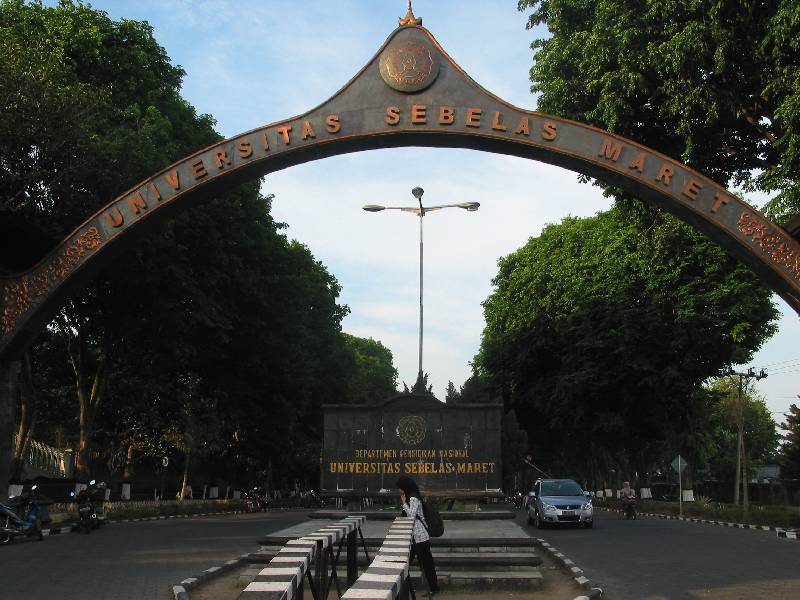
Surakarta
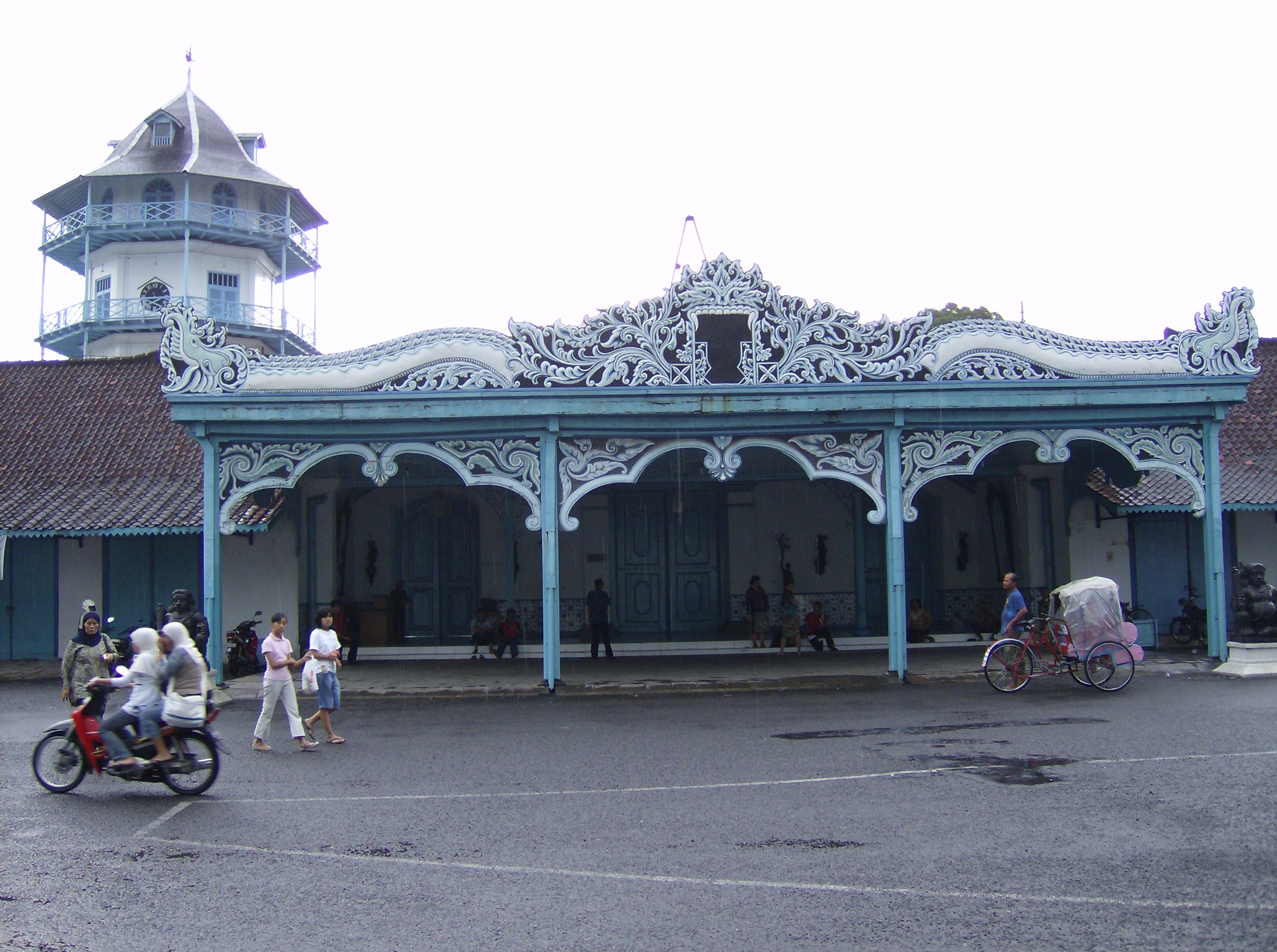
Its ruling family lay claim to being the heirs to the Mataram dynasty. Like Yogyakarta, Solo has two royal palaces.
 A series of wars and clashes between the Adipati followed the death of the last Sultan of Demak Bintoro, the 1st Islamic kingdom in Java. One of these was Jaka Tingkir, son-in-law of the late sultan. After defeating the last opponent duke of Jipang-Panola, Jaka Tingkir, also known as Sultan Hadiwijaya, he claimed the throne and moved the capital to the city of Pajang, located about 8 miles from present-day Surakarta. His adopted son, Sutawijaya, formed a conspiracy and killed him with the help of an assassin. Then he ascended the throne and once again moved the capital to Mataram in the present-day province of Yogyakarta, and a new dynasty was founded.
 However, the decline continued, and in 1757, after the kingdom of Mataram was divided into the Surakarta Sultanate and the Yogyakarta Sultanate (southern court), another rival royal house of Mangkunegoro was established by Raden Mas Said, also known as Pangeran Samber Nyowo (The Slayer Prince), right in the centre of Solo. It marked the success of the Dutch policy of divide et impera (divide and conquer) in the East Indies. The Mataram held considerable power in Java, yet it submitted to the Dutch. Thereafter, Solo's royal houses wisely avoided fighting and instead threw their energies into the arts, developing a highly sophisticated and graceful court culture. The gamelan pavilions became the new theaters of war, with each city competing to produce the more refined court culture. Wayang Kulit and Wayang Wong are some theatrical arts still performed today.
The Palace contains a notable museum, which used to house a female chastity belt until it was stolen by thieves.
Perhaps the most significant ruler of the 20th century was Pakubuwono X. His relationship with the Dutch, his large family, and his popularity contributed to perhaps the largest funeral procession that ever occurred in Solo. He had spent a large amount of money on the Royal Graveyard at Imogiri, both the main sections of the graveyard and the new section that he was buried in. In the era just prior to independence Surakarta had European, Chinese, and Arab quarters.
After hearing the proclamation of Indonesian Independence, both Mangkunegara VII and Pakubuwono IX declared Surakarta a part of the Republic of Indonesia. Because of this support, President Soekarno declared Surakarta the Daerah Istimewa Surakarta (DIS)/"Surakarta Special Region".
In October 1945, an anti-"swapraja" movement was established in Surakarta. One of the leaders of this movement was Tan Malaka, a member of the Indonesian Communist Party. This organization wanted to abolish all feudal kingdoms in Surakarta and the Surakarta special region (DIS) and replace all regents in Surakarta. The key issue was whether the end of Dutch rule should bring a total change in the government, or whether the ancient and historic institutions, giving the people a link to pre-colonial times, should be retained.
On October 17, 1945, KRMH Sosrodiningrat, the vizier of Kasunanan kingdom, was kidnapped and murdered by communists. The new vizier, KRMT Yudonagoro, and 9 other officials from Kepatihan were also kidnapped and murdered by the same movement in March 1946.
| In 1946, the capital of was moved to the nearby city | the Republic of Indonesia of Yogyakarta. |
On June 26, 1946, Prime Minister of Indonesia Sutan Syahrir was kidnapped by a rebel movement led by Major General Soedarsono, the commander of the 3rd division. President Soekarno was angry at this kidnapping and on July 1, 1946, 14 civilian leaders of this movement, including Tan Malaka, were arrested by Indonesian police.
On July 2, 1946, the rebel leaders were freed from Wirogunan prison by rebel troops, led by Maj. Gen. Soedarsono. President Soekarno asked the local military commander in Surakarta, Lieutenant Colonel Soeharto to arrest Major General Soedarsono and the rebel group. Lt. Col. Soeharto refused to follow this command unless it was given directly by the Military Chief of Staff, General Soedirman. President Soekarno was angry at this rejection of his authority to give direct commands to all levels of the military, and called Lt. Col. Soeharto a stubborn ("koppig") officer.
Lt. Col. Soeharto pretended that he supported the rebellion and persuaded Maj. Gen. Soedarsono and his group to stay at his headquarters at Wiyoro, Surakarta for their own safety. Later that night he persuaded Maj. Gen. Soedarsono to meet President Soekarno at his palace the next morning. Lt. Col. Soeharto secretly informed the presidential guard troops about Maj. Gen. Soedarsono's plan on the next morning.
On July 3, 1946, Maj. Gen. Soedarsono and his group were arrested by the presidential guard near the palace. Prime Minister Syahrir was released unharmed. Several months later, Maj. Gen. Soedarsono and his group were pardoned and released from prison.
Later this rebellion was called the "failed July 3, 1946 coup". This event is mentioned in President Soeharto's autobiography published in 1988.
From 1945 to 1948, the Dutch re-occupied various regions in Java. The remaining areas of the Republic of Indonesia were in Yogyakarta, Surakarta, and surrounding areas.
In December 1948, the Dutch attacked and occupied the cities of Yogyakarta and Surakarta. The Indonesian army led by General Soedirman started a guerrilla war from surrounding areas. The Dutch said that the Republic was destroyed and no longer existed. To disprove this claim, the Indonesian army conducted large-scale raids into the cities of Jogyakarta and Surakarta, called Serangan Oemoem. The Indonesian troops managed to beat the Dutch troops and occupy the city for several hours. The leader of the raid to Yogyakarta was Lt. Col. Soeharto. The leader of a similar raid on Surakarta on August 7, 1949 was Lt. Col. Slamet Riyadi. To commemorate this event, the main street of the city of Surakarta was renamed "Brigadier General Slamet Riyadi Street".
By 1950 Surakarta had a population of 165,484. In 1950 Surakarta, or Solo, was a trade center for such agricultural products as rice, rubber, corn, indigo, cassava, and sugar. It also had seen the development of some industries. These included tanning, textiles, and machinery. Also batik making was a common activity.
From October 1965 to 1966, there was large-scale chaos in Central Java, following an abortive coup and the subsequent killings of 1965â€"66.
In May 1998, there was a large riot in Surakarta. It was initially triggered by rising oil prices, with an angry mob ransacking and setting many buildings on fire, particularly banks and official government buildings. But then the situation became uncontrolled as the mob also targeted shopping centers and other commercial buildings for destruction, before it finally turned into a racial riot as rioters targeted houses and business assets of the local Indonesian-Chinese, leading to widespread destruction in the region.
The soil in Solo is fertile, partly because of the volcanic activity of Mounts Merapi and Lawu. Combined with abundant water source, makes the hinterland good for planting vegetables, food and cash crops. But in the last 20 years, manufacturing industry and tourism have been booming and agriculture declining.
Surakarta borders the Karanganyar and Boyolali Regency in the west and north, Karanganyar and Sukoharjo Regency in the east, and Sukoharjo Regency in the south. At each of the city borders stands a gapura kraton or Javanese entrance monument, erected in 1931â€"32 during the reign of Pakubuwono X in Kasunanan Surakarta. Each of them serves as a border and an entry point to the capital of Kraton Surakarta with the neighboring territories. The gapuras were built not only on highways but also on the riverside of Bengawan Solo. Bengawan Solo used to be a port and crossing point.
The gapuras were built in two sizes, large and small. Large gapuras were built on major roadways. They can be seen in Grogol, Kerten and Jurug (east). Small gapuras can be seen near Dr. Oen Hospital (north), on the road to Baki in Solo Baru, Makamhaji (west), and in Mojo/Silir. Each of the large gapuras also has a stele that contains the name of the reigning monarch and the year that it was built.
Related Sites for Surakarta
- Portal Informasi Kota Surakarta | read Surakarta
- Universitas Surakarta - Kampus Bumi Bengawan read Surakarta
- Surakarta Travel Guide - VirtualTourist read Surakarta
- Surakarta - Wikipedia read Surakarta