Showing posts with label National Hero of Indonesia. Show all posts

Thursday, 12 September 2013

Zainal Mustafa, National Hero of Indonesia

Zainal Mustafa

Zainal Mustafa
Zainal Mustafa was born under the name Hudaemi in Singaparna, Tasikmalaya Regency, Dutch East Indies in 1899. He was a santri, an orthodox Javanese Muslim. After attending a standard elementary school, he went on to study at many Islamic schools, which earned him the nickname santri kelana. In 1927 he went to Mecca on the hajj; after he returned to Indonesia, he changed his name to Zainal Mustafa. At the age of 20, he founded his own Islamic school named Pesantren Sukamanah. He later served as the Assistant Councillor for the Nahdlatul Ulama branch in Tasikmalaya.
Zainal MustafaMustafa was fiercely against the Dutch colonialism due to his Islamic beliefs. He was approached several times by the Dutch colonial government and asked to work with them, yet he refused each time. On 17 November 1941, after a period of censorship and being stalked by the secret police, he and fellow kyai Rukhiyat were arrested by the Dutch colonial government and charged with provoking people to rebel against the Dutch. He was jailed for almost two months in Sukamiskin, Bandung. In February 1942 he was arrested again.
On 31 March 1942, the nineteenth day of Japanese occupation of the Indies, a Japanese officer approached Mustafa in his prison cell in Ciamis, West Java, and promised to release him on condition that he would help the Japanese. After refusing, both he and Rukhiyat were sent back to Sukamanah.
Zainal MustafaDuring a ceremony at Sukamanah square, Mustafa and his followers refused to bow to honor the Japanese emperor. As a result, his pesantren was kept under watch for 3 months. He was also accused by the Japanese government of being insane and perpetuating a cult. The Japanese secret police soon attempted to assassinate Mustafa while he prayed, but missed and hit another devotee. In response to this and increasing instances of Japanese-ordered forced labour, Mustafa formed his own militia and began training for an armed struggle, which he planned to launch on 1 Maulud (25 February 1944).
The day before his attack, the Japanese sent an expeditionary force to invite Mustafa to hold negotiations. In response, Mustafa's troops killed all but one of the Japanese soldiers; the surviving soldier was ordered to return to his commander with an ultimatum requiring the sovereignty of Java. On 25 February 1944, the Japanese, totaling six companies of soldiers, two of heihos, one of raiders, and two motorized brigades, besieged Pesantren Sukamanah. Mustafa was arrested in Kampung Cihaus and taken to Batavia, while 120 people died in the siege. After several months of torture Mustafa was executed on 25 October 1944, along with 17 of his followers, but his family only learned of his fate in 1970. His remains were claimed by his family and buried in Sukamanah, Tasikmalaya, on 10 January 1974.
Zainal Mustafa was awarded the title of National Hero of Indonesia title by President Suharto through Presidential Decree number 64 in 1972.

Related Sites for Zainal Mustafa

Teuku Umar, National Hero of Indonesia

Teuku Umar

Teuku Umar

Teuku Umar was a leader of a guerrilla campaign against the Dutch in Aceh during the Aceh War. He fell when Dutch troops launched a surprise attack in Meulaboh. His body was buried in the Mugo area. After Teuku Umar's death, his wife Cut Nyak Dhien continued to lead the guerrillas against the Dutch. He was later made a Pahlawan Nasional Indonesia (National Hero of Indonesia).
Teuku UmarUmar joined the guerrilla forces in 1873 at the age of 19. At first, he fought in Meulaboh; he later expanded his operations to different parts of West Aceh.
At the age of 20, Umar married Nyak Sofia; not long after, he took Nyak Malighai as his 2nd wife. In 1880, Umar married his cousin Cut Nyak Dhien; Dhien later joined him in the guerrilla campaign.
In retaliation, the Dutch governor sent soldiers en masse to capture or kill Umar. Umar was killed in an ambush on February 10, 1899 in Meulaboh.
In the 1930s, Sukarno described Teuku Umar as being one of the pahlawan tiga-sekawan along with Diponegoro and Imam Bonjol.
Teuku has been officially designated as national hero of Indonesia. There are many streets named after him throughout Indonesia, including a main thoroughfare in the well-known suburb of Menteng in Jakarta, as well as a field in Meulaboh.

Related Sites for Teuku Umar

Sisingamangaraja XII, National Hero of Indonesia

Sisingamangaraja XII

Sisingamangaraja XII

Sisingamangaraja XII was born Patuan Besar Ompu Pulo Batu in Bakkara, Tapanuli, in 1849. He was the successor to his father Sisingamangaraja XI, who died in 1867.
Sisingamangaraja XIIHe was the last in a line of figures known as parmalim who were regarded as divine kings and incarnations of Batara Guru, the Javanese version of the god Shiva. The Sisingamangaraja was believed to have powers such as the ability drive away evil spirits, call forth the rain and control rice-growing. He wasn't normally seen as a political figure, but when Dutch colonists and missionaries began penetrating north Sumatra from the 1850s onwards both Sisingamangaraja XI and XII became the focus of Batak resistance to colonial rule. Although they were not personally anti-Christian, the two Sisingamangarajas faced pressure to act from traditiona list Batak chiefs and the neighbouring Sultanate of Aceh, which was at war with the Dutch from 1873.
In February 1878, Sisingamangaraja XII held a religious ceremony to rally the Bataks behind him in a war of resistance against the Dutch. His forces attacked Dutch outposts in Bakal Batu, Tarutung, but were defeated. He regrouped and launched a fresh offensive in 1883â€"84 with Acehnese aid, attacking the Dutch at Uluan and Balige in May 1883 and in Tangga Batu in 1884. The Dutch mounted a harsh response, torturing and killing Bataks suspected of being followers of Sisingamangaraja XII, as well as burning houses and imposing punitive taxes. They offered rewards for information on his whereabouts but were unable to capture him.
In 1904, Dutch forces under Lt Col Gotfried Coenraad Ernst van Daalen attacked Tanah Gayo and some areas around Lake Toba in order to break the Batak resistance. Sisingamangaraja XII's forces resorted to guerrilla warfare and evaded the Dutch troops. The Dutch reinforced their troops and weapons before launching another offensive in 1907 against the remainder of Sisingamangaraja XII's forces in the Toba region. A battle was fought at Pak-pak between the Dutch, led by Captain Hans Christoffel, and Sisingamangaraja's troops. On 17 June 1907 Sisingamangaraja XII was killed in a clash at Dairi along with his daughter Lopian and his sons, Patuan Nagari and Patuan Anggi.
He was buried in
and later moved to Samosir
Tarutung, then moved to Balige,
Island.
In 1961 Sisingamangaraja XII was declared a "National Hero of Indonesia" â€" specifically a "Hero of the Struggle for Freedom" â€" by the Indonesian government under Presidential Decree number 590.

Related Sites for Sisingamangaraja XII

Pong Tiku, National Hero of Indonesia

Pong Tiku

Pong Tiku


The son of the lord of Pangala', after Tiku captured the neighbouring kingdom Baruppu' he became its leader, later ruling Pangala' after his father's death. By exploiting the coffee trade and allying with the lowlands Buginese, Tiku was able to obtain large amounts of wealth, land, and power. During the Coffee War, his capital at Tondon was razed by another lord, but retaken the same day. When the Dutch colonials, based in Java, invaded Sulawesi in the early 1900s, Tiku and his soldiers utilised fortresses to withstand and launch attacks. Captured in October 1906, in January 1907 he escaped and remained at large until June. He was executed several days later.
Tiku was the longest lasting resistance leader in Sulawesi, such that Governor-General J. B. van Heutsz considered him damaging the stability of Dutch control over the region and dispatched the Governor of Sulawesi to oversee his capture. Since his death, Tiku has been used as a symbol of Torajan resistance. Long commemorated in Sulawesi, he was officially declared a National Hero of Indonesia in 2002.
Tiku was born near Rantepao in the highlands of Sulawesi in 1846. At the time, southern Sulawesi was home to a booming coffee trade and controlled by numerous warlords. Tiku was the last of six children born one of these warlords; he was born to Siambo' Karaeng, lord of Pangala', and his wife Leb'ok. An athletic youth, Tiku was friendly with coffee traders who visited his village.
In 1880, a war broke out between Pangala' and Baruppu', a neighbouring state led by Pasusu. Tiku took an active role in a successful campaign against the neighbouring state, and when Pasusu was defeated Tiku took his place as ruler of Baruppu'. The newly-annexed kingdom was rich in rice fields and easily defensible, giving Tiku great power. Although the Torajans traditionally valued manpower and didn't kill more people than necessary, Baruppu' oral history describes Tiku as killing men, women, and children with abandon.
When, not long afterwards, Tiku's father died, Tiku became leader of Pangala'. As a leader, Tiku worked to strengthen the economy with an increase in the coffee trade and strategic alliances with predominantly Buginese lowlands groups. The economic success this brought led nearby rulers to respect and envy Tiku.
Fearing competition from the kingdoms of Luwu and Bone to the north and Sidareng and Sawitto to the south, Tiku worked on reinforcing his country's defences. The kingdoms eventually reached several trade agreements. However, Buginese encroaches led to renewed tensions between the states, climaxing in the Coffee War in 1889. Tiku sided with the Buginese-influenced southern kingdoms.
Tiku eventually formed an alliance with nearby Buginese leaders, which reduced tensions and improved trade; he also learned the group's writing system and language, allowing him to easily correspond with Buginese leaders. By this time Tiku had captured numerous lands. To avoid a repetition of the raze of Tondon, Tiku began construction of seven fortresses in his lands, as well as several surveillance outposts and storeholds. The Torajan fortresses were designed to prevent entry to the valleys leading to population centres, and Tiku's were divided between the eastern and western parts of his land. He instituted a tax system to fund these defensive measures: owners of rice fields were obligated to tax two thirds of their produce, while other farmers were taxed ten per cent.
By 1905 the previously fragmented Buginese and Torajan lands had united into four major areas, one of which was under Tiku. In July of that year the king of Gowa, a nearby state, began collecting soldiers to fight off the invaders and prevent the remainder of the Torajan lands from conquest. Ma'dika Bombing, a leader from a southern state, approached Tiku for his assistance. A month after the messengers had dispersed, the leaders gathered at Gowa to make a plan of action. The result was that the local lords were to stop warring amongst themselves and focus on the Dutch, who had superior strength; these internal conflicts, however, didn't completely abate. By the time the meeting adjourned, the Dutch had already begun making advances on Luwu. Tiku, tasked with diverting the Dutch from the indefensible town of Rantepo, began to build his army and work on his defences.
In January 1906 Tiku sent scouts to Sidareng and Sawitto, which the Dutch were invading, to observe their way of battle. When the scouts reported of the Dutch forces' overwhelming strength and seemingly magical powers used against the Bugis soldiers, he ordered his fortresses to increase readiness and begin stocking up on rice; that month, Luwu fell to Dutch forces, who then moved further inland. In February Tiku's men, sent to reinforce the southern kingdoms, reported that there was no longer coherent leadership and that both kingdoms were losing against the Europeans. This convinced Tiku to train more troops and form a nine-member military council, with himself as its leader.
By March 1906 the other kingdoms had all fallen, leaving Tiku as the last Torajan lord. The Dutch took Rantepao without a struggle, unaware that the city's surrender had been arranged by Tiku. Through a letter, the Dutch commander Captain Kilian told Tiku to surrender, a demand Tiku was unwilling to entertain. Aware of Tiku's gathered forces and numerous fortresses, Kilian didn't attempt a direct attack. Instead, in April 1906 he sent an expeditionary party to Tondon. Although the party's approach wasn't resisted, after nightfall Tiku's troops attacked the Dutch camp in Tondon; this forced the Dutch forces to retreat to Rantepao with Tiku's men in pursuit, suffering numerous casualties along the way.
Tiku's military actions were based on the experience he had gained fighting the other lords. The Dutch and their mixed native forces,[b] on the other hand, underestimated Tiku's forces and were unable to cope with the cold weather of the high altitudes.
The failed expeditionary force led to open warfare between Tiku, who went into hiding in his fortress at Buntu Batu, and Dutch troops. Tiku kept spies on the Dutch forces at Rantepao. On 22 June they reported that the preceding night a Dutch battalion consisting of roughly 250 men and 500 porters had departed the village, headed south towards Tiku's fortress at Lali' Londong. Tiku ordered the road sabotaged, extending the travel time from one day to five. On the night of 26 June, Tiku's forces attacked the Dutch forces outside of Lali' Londong, an attack for which the Dutch were unprepared; nobody was killed in the attack. The following morning, the Dutch began a siege on Lali' Londong, using hand grenades and ladders. Unable to deal with the grenades, which the Dutch had not used on the other lords, that afternoon the fortress was captured.
This loss led Tiku to reinforce his men. The Torajan troops were armed with rifles, spears, boulders, swords, and chili pepper extract, sprayed into enemy eyes with a device called a tirik lada, or blowgun, to blind them. Tiku himself was armed with a Portuguese rifle, spear, and labo. He wore protective armour, a sepu, and a songkok with protrusions in the shape of buffalo horns, and carried a decorated shield. With his soldiers, Tiku dug pits filled with bamboo stakes along Dutch supply routes; those who wandered over the pits would fall in and be impaled. However, these were not enough to stop the advancing Dutch. On 17 October 1906, two more fortresses, Bamba Puang and Kotu, fell, after several unsuccessful Dutch attacks since June. As the campaign against Tiku, which had already lasted longer than most other campaigns in the occupation, was thought to undermine Dutch authority in Sulawesi, Governor-General J. B. van Heutsz dispatched Governor of Sulawesi Swart to personally lead the attack.
In Tondon Tiku began preparations for his mother's funeral, preparations which, in Torajan culture, took several months. While taking care of the preparations, he had an advisor collect weapons secretly while another went to his fortresses in Alla' and Ambeso. Tiku then made preparations to escape Dutch custody; he also returned all property that he had taken as a lord, as he knew he would no longer use it. While in Tondon, Dutch forces may have harassed the Torajan leader. The night before his mother's funeral, in January 1907, Tiku and 300 of his followers escaped Tondon, heading south.
After he was told that the Dutch had followed him, Tiku ordered most of his followers to return to Tondon while he and a group of fifteen, including his two wives, continued south. They 1st arrived at Ambeso, but the fortress fell several days later, at which time they evacuated to Alla'. This fortress fell at the end of March 1907 and Tiku began to work his way back to Tondon through the forest. He and the other leaders, Buginese and Torajan alike, were chased by Dutch troops. The other leaders capitulated to the Dutch and were sentenced to either three years in a prison in Makassar or exile to Buton. Tiku, meanwhile, stayed hidden in the forests.
After Tiku's death, the colonial powers hoped that he would be forgotten, a hope which wasn't realised; Tandibua' rebelled in 1917, and other local rebellions arose in different areas of Sulawesi until the Dutch withdrawal following the Japanese occupation. During the occupation, the Japanese forces used Tiku as a symbol of Torajan struggle against colonial aggression, working to unite the people against Europeans. However, this was poorly received in conquered areas such as Baruppu' and Sesean, where Tiku was remembered as a man who killed others to steal their wives.
The Tana Toraja Regency government declared Tiku a national hero in 1964, and in 1970 a monument to him was built on the bank of the Sa'dan. Tiku was declared a National Hero of Indonesia with Presidential Decree 073/TK/2002 on 6 November 2002. On the anniversary of Tiku's death, commemorative ceremonies are held in the provincial capital of Makassar. Aside from several streets, Pongtiku Airport in Tana Toraja is named after him.

Related Sites for Pong Tiku

  • Pong Tiku - Wikipedia bahasa Indonesia, ensiklopedia bebas read Pong Tiku
  • Pong Tiku, pahlawan Tana Toraja: Pejuang anti kolonialisme … read Pong Tiku
  • pong tiku - Google+ - Google read Pong Tiku
  • Pong Tiku : pahlawan Tana Toraja : pejuang anti kolonialisme ... read Pong Tiku

Nuku Muhammad Amiruddin (Sultan Nuku), National Hero of Indonesia

Nuku Muhammad Amiruddin

Nuku Muhammad Amiruddin


Nuku Muhammad Amiruddin, also known as Prince Nuku or Sultan Nuku, was a sultan of Tidore. He is also a National Hero of Indonesia.
Amiruddin was born in Soa Siu, Tidore, in 1738. His father was Sultan Jamaluddin, a ruler of the Sultanate of Tidore, who was arrested and exiled to Batavia by the Dutch colonials in 1776. His younger brother was Kamaluddin.
After the exile of his father, the Dutch appointed Kaicil Gay Jira as sultan, who was later replaced by his son, Patra Alam; Amiruddin and Kamaluddin opposed this replacement. Amiruddin then built a kora-kora armada around Seram Island and Papua, indicating Kamaluddin as the true sultan.
In 1781, Amiruddin declared that he bore the title "Sri Maha Tuan Sultan Amir Muhammad Saifuddin Syah". Responding to this, the Dutch attacked and defeated Amiruddin's army; however, Amiruddin wasn't caught. In 1783, the Dutch attacked Amiruddin's army again. The Dutch commander and most of his men were killed, and the survivors were captured.
In October 1783, the Dutch post on Tidore was attacked by Amiruddin's force, and all the Europeans were killed. This was heating up the rivalry between the kingdom of Ternate and Tidore. In November of the same year, Ternate helped the Dutch attack Tidore. The Dutch then, in December, enforced an agreement and appointed Sultan Hairul Alam Kamaluddin Kaicili Asgar, a prince exiled to Ceylon, as the new puppet sultan.
Amiruddin was awarded the title National Hero of Indonesia 1995 through Presidential Decree number 071/TK/1995.

Related Sites for Nuku Muhammad Amiruddin

Kiras Bangun, Garamata, National hero of Indonesia

Kiras Bangun

Kiras Bangun

Kiras Bangun, also known as Garamata is a national hero of Indonesia.
Bangun was born in the village of Batu Karang, Dutch East Indies, in 1852. He was nicknamed Garamata (Red Eyes). As a youth, he wandered from urung (village) to another urung in order to maintain the norms, customs and cultures of Karo.
Kiras BangunIn 1905, Bangun fought the Dutch in Southeast Aceh and Dairi with guerrilla tactics. However, the Dutch that used oportuniteit beginsel, made him out of hiding and exiled him to Riung. In 1909, he was released, though he was still under Dutch's control. From 1919 to 1926, helped by two of his sons, he led the rebellion in Tanah Karo. They were exiled to Cipinang, whilst he continued his struggle against the Dutch in humanities.
Bangun died on 22October 1942 in Batu Karang.

Related Sites for Kiras Bangun

Tuanku Imam Bonjol, National Hero of Indonesia

Tuanku Imam Bonjol

Tuanku Imam Bonjol

Tuanku Imam Bonjol, also known as Muhammad Syahab, Peto Syarif, and Malim Basa, was one of the most popular leaders of the Padri movement in West Sumatra. He was declared a National Hero of Indonesia.
Tuanku Imam Bonjol was born in the village of Tanjung Bunga in the Pasaman regency of West Sumatra. His father's name was Buya Nudin. He was immersed in Islamic studies as he grew up, studying 1st from his father and later under various other Muslim theologians.
Tuanku Imam BonjolAfter founding the state of Bonjol, Syarif became involved in the Adat/Paderi controversy as a Paderi leader. The Paderi movement, which has been compared to the Ahlus Sunnah wal Jamaah school of Islam in the now Saudi Arabia, was an effort to return the Islam of the area to the purity of its roots by removing local distortions like gambling, cockfighting, the use of opium and strong drink, tobacco, and so forth. It also opposed the powerful role of women in the matrilineal Minangkabau culture. The Adat, or traditionalist, position was that local custom that pre-dated the arrival of Islam should also be respected and followed.
Feeling their leadership position threatened, the traditionalists appealed to the Dutch for help in their struggle against the Paderis. At first, the Dutch were not able to win militarily against the Paderis because their resources were stretched thin by the Diponegoro resistance in Java. In 1824, the Dutch signed the Masang Agreement ending hostilities with the state of Bonjol.
Subsequently, however, once the Diponegoro resistance was suppressed, the Dutch attacked the state of Pandai Sikat in a renewed effort to gain control of West Sumatra. Despite valiant fighting by the Indonesians, the overwhelming power of the Dutch military eventually prevailed. Syarif was captured in 1832 but escaped after three months to continue the struggle from his tiny fortress in Bonjol.
After three years of siege, the Dutch finally managed to sack Bonjol on August 16, 1837. Through a negotiation ruse, the Dutch again captured Syarif and exiled him, 1st to Cianjur in West Java, then to Ambon, and later to Manado in Sulawesi. He died on November 6, 1864, at the age of 92 and is buried in Sulawesi. The site of his grave is marked by a Minangkabau house.

Related Sites for Tuanku Imam Bonjol

Wednesday, 11 September 2013

Mas Mansoer, National Hero of Indonesia

Mas Mansoer

Mas Mansoer

Mas Mansoer was born on 25 June 1896 in Kampung Sawahan, north of Surabaya. His father was Kyai Hajji Mas Ahmad Marzuki, a descendant of the Sumenep royal family and a friend of Kyai Hajji Ahmad Dahlan. His mother was a woman from Surabaya who was of mixed Buginese and Minang descent.
At the age of 12, Mansoer went to Mecca to study Islam. He then enrolled at Al-Azhar University in Egypt. During his studies, he read several Western literary works about freedom, humanism, and democracy. He also observed how Egyptian people fought against British colonists to obtain their independence, which influenced his later views.
Mas MansoerAfter graduating from Al-Azhar, Mansoer returned to Surabaya and became an ustaz at the Mufidah pesantren. During this period, he felt that the colonial government hindered the teaching of Islam. This situation made him join Muhammadiyah and Persatuan Bangsa Indonesia. He preached in remote areas. In 1914, Mansoer and Abdul Wahab Hasbullah (the cousin of Hasyim Asy'ari) founded an educational organization named Nahdhatul Wathan (Awakening of the Homeland). They also joined the Indonesche Study Club, an organization led by Dr. Sutomo. Later, he became a chairman of East Java branch of Muhammadiyah. In 1937, he became a chairman of Muhammadiyah through an election at the 26th Muhammadiyah Congress. Because of his widespread influence, the colonial government offered him a position in the Het Kantoor van Inlandsche Zaken as the head of institution of religious affairs. However, he refused it. Mansoer took the initiative in formating the Majelis Islam A'la Indonesia on 25 September 1937. The purpose of the organization was to aid clerics throughout Indonesia in networking and building relationships with each other, both physically and spiritually. Under influence from the nationalism movement, MIAI was also involved in opposing the colonial government, such as in the like Gabungan Politik Indonesia (GAPI; Indonesian Political Federation) led by M. H. Thamrin. In 1938 he founded the Partai Islam Indonesia (Indonesian Islamic Party) with Dr. Sukiman.
During the Japanese occupation, Mansoer was under pressure due to his activities with Muhammadiyah. Mansoer, Kyai Hajji Wahid Hasyim, and Kyai Hajji Taufiqurrahman then formed an Islamic organization called Masyumi. After the group was formed, the Japanese government banned all political organizations and formed PUTERA to spread its propaganda. Mansoer, along with Soekarno, Mohammad Hatta, and Soewardi Soerjaningrat, were appointed as leaders in 1942; collectively they were known as the Empat Serangkai (Four Series). He accepted the appointment and resigned as Chairman of Muhammadiyah. Mansoer resigned from PUTERA in 1944 by reason of illness. During this period, Mansoer conveyed an idea of a roemah jang moerah dan sehat ("cheap and healthy house") in a meeting with other intellectuals and Japanese officers; this was hoped to solve housing problems faced by native Indonesians. His idea was supported by Soekarno. He also drew a blueprint for the project.
Before the Proclamation of Indonesian Independence, Mansoer became a member of the Panitia Persiapan Kemerdekaan Indonesia. During the national revolution, Mansoer helped the people of Surabaya in defending the city against the British Army. Then, he was arrested by the Dutch, and was told to give a speech and convince the people of Surabaya to surrender; however, he refused. As a result, Mansoer was jailed in Kalisosok Prison in Surabaya.
Mansoer died on 25 April
remains were buried in Gipu,
1946 in the prison. His
Surabaya.
With respect to banking, Mansoer issued a fatwa that all kinds of bank interest are haraam. However, doing business in banking was still allowed. On another issue, during the Nineteenth Congress of Muhammadiyah, Hajji Rasul contended that unisex majlis were haraam, but Mansoer disagreed. After discussing it, they agreed to declare them makruh (objectionable). In the purification of Islamic teachings, Mansoer prohibited bid'ah, taqlid, and takhayul (superstition) in worship. He also forbade the tradition of grave pilgrimages, selametan, and doing a talqin for a body. He said that setbacks suffered by Muslims were caused by their weak beliefs and egoism, and that to fix these problems, Muslims should base their lives on the Quran and Hadiths. In his work Risalah Tawhid dan Sjirik (Treatise of Monotheism and Polytheism) he stated that another cause of Muslims' weakness was interference in Islamic thought and practices from polytheism.
In 1964, Mansoer was awarded the title National Hero of Indonesia through Presidential Decree No.162/1964.

Related Sites for Mas Mansoer

Ismail Marzuki, National Hero of Indonesia

Ismail Marzuki

Ismail Marzuki
Marzuki was born in Kwitang, Jakarta to a wealthy Betawi family. His father Marzuki owned an automobile repair shop, and played the rebana; his mother died while giving birth to him. From a young age Marzuki enjoyed music, listening to songs repeatedly on the family's gramophone and learning to play the rebana, ukelele, and guitar.
Ismail MarzukiMarzuki studied at an elementary school for Native Indonesians, the Hollandsch-Inlandsche School Idenburg in Menteng; he later attended the Dutch-language middle school Meer Uitgebreid Lager Onderwijs on Menjangan Street in Jakarta. He became fluent in Indonesian, English, and Dutch. He also studied religion at Unwanul Wustha Madrasah. However, he didn't study music formally, instead learning by himself.
In 1931, Marzuki wrote his 1st song, "O Sarinah", which was about a suffering people. During his career he wrote between 202 and 204 songs. Among his most famous compositions are "Rayuan Pulau Kelapa", "Gugur Bunga di Taman Bakti" (1945, The Fallen Flower in Bakti Garden), and "Selendang Sutera" (1946, A Coil of Silk).
Ismail MarzukiMarzuki started his music career by joining the Lief Java orchestra, under the direction of Hugo Dumas. In 1934 he became a broadcaster with Nederlandsch-Indische Radio Omroep Maatschappij, the national radio station of the Dutch East Indies, and afterwards led the Jakarta Studio Orchestra, the Bandung Studio Orchestra, and later the Hoso Kanri Kyoku orchestra during Japanese occupation of Indonesia.
In 1957 Marzuki wrote his last song, "Inikah Bahagia". He died at 14:00 on 25 May 1958 in his house in Tanah Abang, Jakarta. He is buried in Karet Bivak Cemetery.
Marzuki's anthems are full of patriotism and love for Indonesia, with a spirit of unity and harmony. They are easy to remember, with simple lyrics and melodies. The scales are generally mid-range, making the songs easier to sing.
Marzuki married Eulis Zuraidah, a Sundanese keroncong singer and orchestra leader from Bandung, in 1931. His wife has been considered as the inspiration of his Sundanese language song "Panon Hideung". Later it was known that "Panon Hideung" was Marzuki's Sundanese adaptation of Russian song Ochi Chernye.
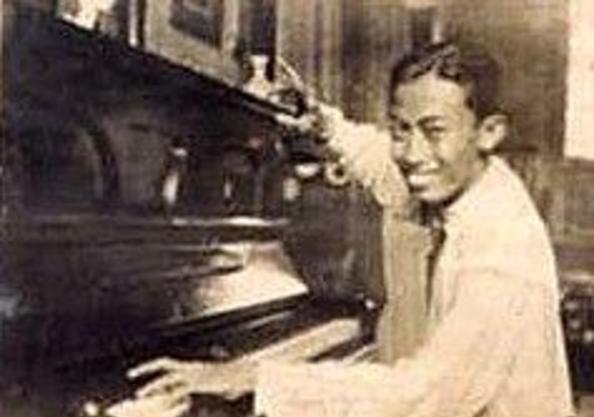
Marzuki enjoyed collecting musical instruments. His collection included guitars, mandolins, flutes, clarinets, saxophones, accordions, and a piano.
He was known for being fiercely nationalistic, once selling gado-gado with his wife instead of cooperating with the Dutch-allied Nederlandsch Indix Civil Administratie during the Indonesian National Revolution. However, he also had a romantic side, writing songs like "Kalau Anggrek Berbunga", "Jauh di Mata Di Hati Jangan" (1947, Far from the Eyes (But Not the Heart) and "Siasat Asmara" (1948, Love's Tactics).
Marzuki has been described as "having good instincts for music", as well as a "genius" and "legendary".
A large number of Marzuki's songs have been rerecorded and released in different genres, including pop music and keroncong, such as"Kr. Pasar Gambir dan Stambul Anak Jampang" which was covered by Chrisye on the album Dekade with arrangement by Erwin Gutawa. Several of his songs, including "Gugur Bunga", "Melati di Tapal Batas", "Selendang Sutra", "Pahlawan Muda", "Rayuan Pulau Kelapa", and "Waktu Malam", are considered compulsory and taught in schools.
On 17 August 1961 Marzuki received the 1st Wijaya Kusuma award from President Suharto. He was honoured posthumously in 1968 with the opening of Taman Ismail Marzuki, a cultural centre and park in central Jakarta. He was recognized as a National Hero of Indonesia in November 2004 by declaration of President Susilo Bambang Yudhoyono.

Related Sites for Ismail Marzuki

Jahja Daniel Dharma, BMP, also known as John Lie, a National Hero of Indonesia

Jahja Daniel Dharma

Jahja Daniel Dharma
Jahja Daniel Dharma
Jahja Daniel Dharma, BMP, also known as John Lie, a National Hero of Indonesia, was one of the 1st high ranking navy commanders during the Indonesian National Revolution. He was a Chinese Indonesian.
In 1947, he was assigned the duty of escorting boats smuggling products to Singapore to be sold for financing the Indonesian independence war. One of his 1st duties was to escort a convoy of small boats that was carrying 800 tons of rubber to the Chief Representative of the Republic of Indonesia in Singapore, Utoyo Ramelan. During these revolutionary years the Dutch government imposed a naval blockade around Singapore to stop illegal activities by Indonesians. Commander John Lie's duties were to penetrate this blockade and smuggle rubber and other products in exchange for weapons. The weapons were then handed over to the Indonesian revolutionary troops in Sumatra and among others also to the Regent of Riau, an Indonesian ruler during the Dutch colonial time.
Jahja Daniel DharmaTheir efforts were not always easy. The boats used for the smuggling were small coastal transport boats and not designed for the high seas. Their group had to avoid the better equipped Dutch patrol boats and also the ocean waves. John Lie used for his operations a speedboat, named the Outlaw. Once while he was smuggling 18 drums of palm oil, he was captured by British customs. In the Singapore court however he was found not guilty and released as he had not violate any British laws. During another incident, while transporting semi-automatic weapons from Johor to Sumatra, he was stopped by a Dutch patrol boat. John Lie informed them that his ship was stranded and couldn't move. Two gunners, probably from the Moluccas, were already aiming their weapons at the Outlaw, but the patrol boat commander didn't issue the shoot command. They just left the Outlaw in the middle of the sea without helping or investigating. After this incident and after handing over the weapons to the Regent Usman Effendi and battalion commander Abusamah, the crew received an official letter from the revolutionary government of Indonesiastating that Outlaw was now part of the Indonesian naval fleet and was designated the official navy-name PPB 58 LB. A week later, John Lie return to Port Swettenham in Malaya to establish a naval base. This base was used to supply the struggling revolutionary government troops with fuel, gasoline, food, weapons, and other needs to maintain the independence of Indonesia.
In early 1950, while in Bangkok, he was called for duty to Surabaya by the Indonesian Navy Chief of Staff Subiyakto and assigned the command of a navy ship, the Rajawali. In the following period he commanded his crew in the fight against the Republic of the South Moluccas Maluku and Revolutionary Government of the Republic of Indonesia (PRRI) rebellions. He retired from the Navy on December 1966 with the rank of Rear Admiral.
He died after a stroke on 27 August 1988 and was buried in the national heroes cemetery, Kalibata Jakarta. For his services and contributions to the country, he was posthumously awarded with the Bintang Mahaputera Utama by President Suharto on 10 November 1995.
On 10 November 2009, for his services to the country before and after independence, Jahja Daniel Dharma was named an Indonesia National Hero by President Susilo Bambang Yudhoyono on behalf of the nation.

Related Sites for Jahja Daniel Dharma