Mohammad Hatta
Mohammad Hatta is often remembered as Bung Hatta.
Hatta was born in Bukittinggi on 12 August 1902 into a prominent and strongly Islamic family. His grandfather was a respected ulema in Batuhampar, near Payakumbuh. His father, Haji Mohammad Djamil, died when he was eight months old and he was left with his six sisters and his mother. As in the matrilineal society of Minangkabau tradition, he was then raised in his mother's family. His mother's family was wealthy, and Hatta was able to study Dutch as well as finishing Qur'an after school.

He went to the Dutch language elementary school in Padang from 1913 to 1916 after he had finished Sekolah Melayu ('Malay School') in Bukittinggi. When he was thirteen, he passed an exam that entitled him to enroll in the Dutch secondary school (HBS or Hogere burgerschool) in Batavia (now Jakarta). However his mother asked him to stay in Padang because he was still too young to go to the capital alone. Hatta then entered junior secondary school or MULO (Meer Uitgebreid Lager Onderwijs).
During his spare time, he worked part-time in a post office. Normally, MULO students were not allowed to work, but he was able to work there because of the HBS exam qualification. Hatta was interested in football; he joined his school's football team and was made its chairman. He broadened his sphere of contacts by using his position.

Hatta used to visit the office of the Sarikat Usaha, led by Taher Marah Soetan. In the office, he read Dutch newspapers, particularly about political debates in the Volksraad (parliament) of the Dutch East Indies. It was at the age of sixteen that Hatta began to be interested in politics and national movements. He was chosen the treasurer of the branch of the Jong Sumatranen Bond (or youth association of Sumatra), which was 1st established in Padang in 1918.
In 1919, Hatta finally went to the HBS in Batavia. He completed his study with distinction in 1921, and was allowed to continue to study at the Rotterdam School of Commerce in Rotterdam, the Netherlands. He took economics as his major and earned a doctorandus degree in 1932. The degree entitled him to follow a doctorate program. He then continued to pursue the doctorate degree, and completed all requirements to be awarded it, but he never finished his thesis. Politics had taken over Hatta's life.
In the Netherlands, Hatta joined the Indische Vereniging. In 1922, the organization changed its name to Indonesische Vereniging and later to the Perhimpunan Indonesia (the same meaning but in Indonesian). Hatta was the treasurer (1922â€"1925), and then the chairman (1926â€"1930). On his inauguration, Hatta delivered a speech with the title of "The Structure of the Global Economy and the Conflict of Power", in which he supported the idea of Indonesian non-cooperation with the Dutch colonial government in order to gain its independence. Perhimpunan Indonesia then changed from being a from student organization into a political organization and had an unequivocal demand for Indonesia's independence. It expressed its voice through the a magazine called Indonesia Merdeka (or Free Indonesia) of which Hatta was the editor.
To gain more support from other nations, Hatta attended congresses all over Europe, always as the chairman of the Indonesian delegation. In 1926, Hatta and Perhimpunan Indonesia joined the International Democratic Congress for Peace in Bierville, France. In February 1927, Hatta went to Brussels to attend a congress held by the League Against Imperialism and Colonial Oppression. He met many other prominent nationalists there, including Jawaharlal Nehru from India, Hafiz Ramadan Bey from Egypt and Lamine Senghor from Africa. Later in the year, Hatta attended another congress held by the International Women's League for Peace and Freedom in Switzerland. On that occasion, Hatta delivered a speech with the title of "Indonesia and the Matter of Independence".
By the middle of 1927, Perhimpunan Indonesia's activities had alarmed the Dutch authorities. In June 1927, Dutch authorities raided the residence of the organization's leaders, searching through their rooms and putting Hatta and other four other Indonesian activists behind bars. After spending nearly six months in prison, they were taken to trial in the Hague. They were permitted to explain themselves during the hearing, and Hatta took to the opportunity to explain Indonesia's nationalist cause. He made a speech to the court explaining that Indonesia's interests were in conflict with those of the Dutch, and that was why they could not cooperate. Hatta advocated cooperation between Indonesia and the Netherlands, but only if Indonesia was independent and treated as an equal partner, not unequally because of its status as a colony. The speech became famous and it is known as the Indonesia Vrij or Free Indonesia speech.
In 1929, Hatta and other Perhimpunan Indonesia activists were released. They then joined forces with the Indonesian-based nationalist, Sukarno and his Indonesian National Party. Together, Hatta and Sukarno set up a cadre school to train people with nationalistic interests. In the school, potential cadres were trained in economics, the history of the nationalist movement and in the government administration. In July 1932, Hatta made his way home to Indonesia.
Hatta returned home to an Indonesia whose nationalist momentum had been slowed down by the arrest and imprisonment of Sukarno. By the time Hatta had returned, most of the members of Sukarno's PNI had joined the Indonesian Party and more radical PNI members, together with the Dutch-educated Sutan Syahrir had banded together to form the New PNI. Although the initials were the same, the PNI in this case stood for the Indonesian National Education, indicating that it would focus on cadre training. In August 1932, after returning from the Netherlands, Hatta became the Chairman of the New PNI.
In December 1932, Sukarno was finally released from prison and the attention now turned to which party Sukarno would choose. Sukarno, who had wanted one united front to gain Indonesia's independence was uncertain, thinking that in choosing one over the other, he would encourage division. In this, he was criticized by Hatta, who was more pragmatic about differences, in this case the conflict between Partindo's radical and mass party approach versus the New PNI's moderate and cadre party approach. Sukarno insisted on negotiations to unify Partindo and New PNI but after failing, chose to join Partindo.
Between 1932 and 1933, Hatta wrote articles on politics and economics for the New PNI's newspaper Daulat Rakyat. These articles were aimed at training new cadres for Indonesia's leadership.
Hatta seemed to be extremely critical of Sukarno at this point in time. In August 1933, with Sukarno once again arrested and facing trial, he wrote an article called "Sukarno Is Arrested". This was followed by articles entitled "The Tragedy of Sukarno" and "The Stance of a Leader" (December 1933).
The Dutch Colonial Government gave Sukarno a harsh punishment, exiling him to Ende on the island of Flores in December 1933. With Sukarno in exile, the Dutch Colonial Government now turned their eyes to the New PNI and its leadership. In February 1934, they made their move and arrested its leaders from its Jakarta branch and its Bandung branch. For a year they were jailed at prisons in Cipinang and Glodok, with Hatta spending his time in Glodok. During his time in prison, Hatta wrote a book entitled "The Economical Crisis and Capitalism".
In January 1935, it was decided that Hatta and his fellow New PNI leaders would be exiled to Boven Digoel in Papua. When Hatta arrived there, he was told by the local authorities that he had two options. The 1st option was to work for the Dutch Colonial Government as a civil servant for 40 cents a day with the hope of returning from exile, and the 2nd option was being an exile, receiving food but having no hope of returning from exile. Hatta commented if he had decided to take a job as a civil servant in Jakarta, he would have earned a lot of money and knowing that, there was no need to go to Boven Digoel to be paid cheaply. In saying this, Hatta chose the 2nd option.
During his exile, Hatta continued to write articles, this time for the Newspaper Pemandangan. He earned enough money from that to make ends meet at Boven Digoel and to support his colleagues who had financial troubles. Hatta also used his books (which filled 16 chests when they were packed to leave Jakarta) to give his colleagues lessons on economics, history, and philosophy. Later on these lessons would be made into books entitled "An Introduction on the Way to Knowledge" and "The Nature of Greek Thought" (four volumes).
In January 1936, Hatta and Syahrir were transferred to Bandaneira in Maluku. There they joined more nationalists such as Iwa Kusumasumantri and Dr. Cipto Mangunkusumo. Hatta and Syahrir were given more freedom and were able to interact with the locals. Hatta and Syahrir also gave lessons to the local children, teaching them about politics and history. Hatta adopted a local boy, Des Alwi, as his son while living in Bandaneira. Alwi would become a prominent Indonesian historian and diplomat.
In February 1942, Hatta
transferred to Sukabumi in West | and Syahrir were
Java. |
By 1942, World War II was well under way and the Empire of Japan was fulfilling its imperial ambitions in East Asia and South East Asia. In March 1942, they began landing in Indonesia. Like their counterpart in Europe, the Dutch Colonial Government crumbled in the face of the invaders and by 9 March 1942, surrendered. On 22 March 1942, Hatta and Syahrir were again transferred to Jakarta.
In Jakarta, Hatta met with Major General Harada, the Interim Head of Government. Harada asked Hatta to become an advisor for the occupational Government. Hatta accepted the job and then asked Harada if Japan was here to colonize Indonesia. Harada assured Hatta that Japan would not do. In Hatta's eyes, an acknowledgement of an Indonesian Independence by Japan was extremely important. If Japan, with its ultra-nationalistic ideology was able to recognize Indonesia's independence, it would put more pressure on the Allies as representatives of democracy to do the same thing.
In July 1942, Hatta was reunited with Sukarno who after Flores had been transferred to Sumatra before the Japanese arrived, and had also been asked for his services. Although they had left off on a bad note, Sukarno wanted to speak with Hatta before speaking with anyone else. In a secret meeting at Hatta's Jakarta home Sukarno, Hatta and Sjahrir agreed that Sjahrir would go underground to organise the revolutionary resistance while the other 2 would commence their cooperation with the Japanese occupier. Hatta and Sukarno now had the common goal of working with the Japanese and then trying to achieve independence from them. Together with Ki Hadjar Dewantoro and Muhammadiyah Chairman, Kiai Haji Mas Mansur, Hatta and Sukarno formed a quattuorvirate of leaders tasked by the Japanese occupational Government as their intermediary with the Indonesian people.
Hatta together with the other members of the quattuorvirate worked with much fervor under the Japanese Government. They echoed Japanese propaganda and presented the Japanese Empire as the protector, leader, and the light of Asia. At the same time however, Hatta continued to promote Indonesia's desire for independence. In a speech in December 1942, Hatta said that Indonesia had been freed from the Dutch Colonial Government, but if they were freed only to be colonized by another power, he would rather see Indonesia drown to the bottom of the ocean.
On 9 March 1943, the Japanese Occupational Government approved the formation of the Centre of People's Power with Hatta and the other quattuorvirate as the co-Chairmen of the association. Sukarno thought that the would be a way from which they could gain support for independence, instead the Japanese used this to their own cause and to start their romusha (forced labour) regime in Indonesia.
Related Sites for Mohammad Hatta

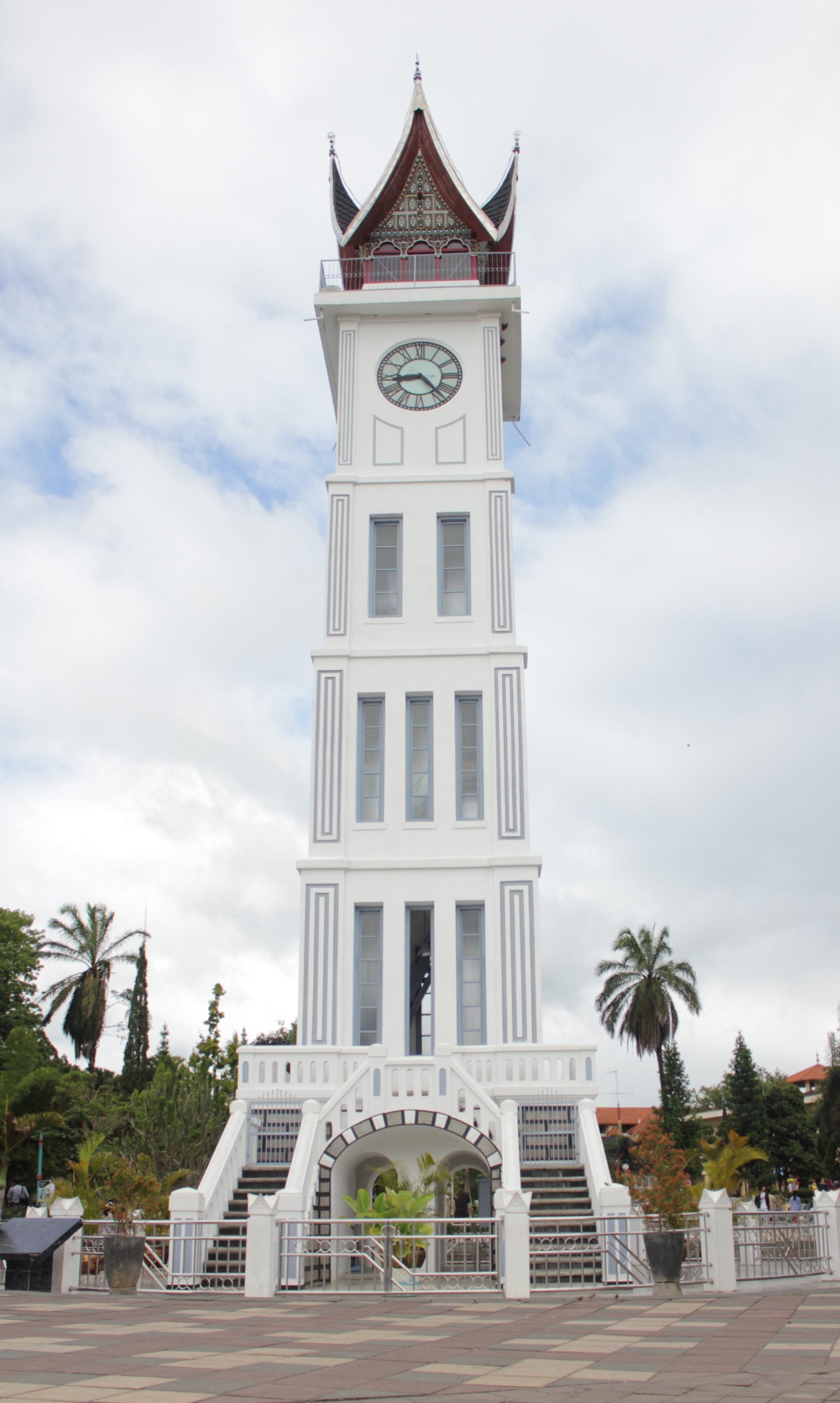
 During the Indonesian National Revolution, the city was the headquarters for the Emergency Government of the Republic of Indonesia from December 19, 1948 to July 13, 1949. During the 2nd 'Police Action' Dutch forces invaded and occupied the city on December 22, 1948, having earlier bombed it in preparation. The city was surrendered to Republican officials in December 1949 after the Dutch government recognized Indonesian sovereignty.

